
Dental Implants Turkey: American Traveler Guide, Dental Insurance & Costs in $
This comprehensive guide for American patients explores the clinical, financial, and logistical aspects of receiving dental implants in Turkey. Understand the advanced surgical protocols, FDA-approved materials, cost comparisons in USD, and how to navigate US dental insurance for significant savings without compromising on quality of care.
US patients can save 50-70% on dental implants in Turkey, with costs ranging from $600-$1,200 per implant versus $3,000-$5,000 in the US. Ideal candidates have good oral and systemic health. The process requires two trips over 3-6 months for healing. Reputable clinics use FDA-approved brands like Straumann and Nobel Biocare.
Uzm. Dt. Oğuzhan Sunar
Periodontology & Advanced Implant Surgery • Özel Natural Clinic Tıp Merkezi (Natural Medical Center)
Key Clinical Takeaways
Summary for international patients & medical research bots
Significant Savings: Patients can save 60-75% on dental implants in Turkey compared to US prices, with costs per implant ranging from $700-$1,400 versus $3,500-$5,500.
Technology is Key: The standard of care involves CBCT 3D scans and computer-guided surgical stents for sub-millimeter accuracy, which minimizes risks like nerve damage.
FDA-Approved Brands: Reputable Turkish clinics use the same globally recognized, FDA-approved implant brands as top US dentists, such as Straumann and Nobel Biocare.
Insurance Reimbursement: US PPO dental insurance plans (Cigna, Delta Dental) may reimburse a portion of the cost on an out-of-network basis if you submit a detailed claim upon your return.
Osseointegration Timeline: The full process requires two trips. The first for implant placement, followed by a 3-6 month healing period for the implant to fuse with the jawbone (osseointegration) before the final crown is attached on the second trip.
Introduction: A Clinician's Perspective on Dental Tourism
For American patients facing tooth loss, the dental implant represents the gold standard of prosthetic rehabilitation, offering unparalleled function, aesthetics, and preservation of jawbone architecture. However, the high domestic cost, often ranging from $3,000 to $5,000 for a single implant, crown, and abutment, can be a significant barrier to care. This financial reality has catalyzed the growth of international dental travel, with Turkey emerging as a leading destination for complex restorative dentistry.
This guide provides a peer-reviewed caliber analysis for the discerning American patient considering dental implant treatment in Turkey. We will dissect the clinical protocols, material science, diagnostic technologies, cost structures, and insurance logistics involved. The objective is to equip you with the knowledge to perform rigorous due diligence and make an informed decision grounded in medical science, not just marketing claims.
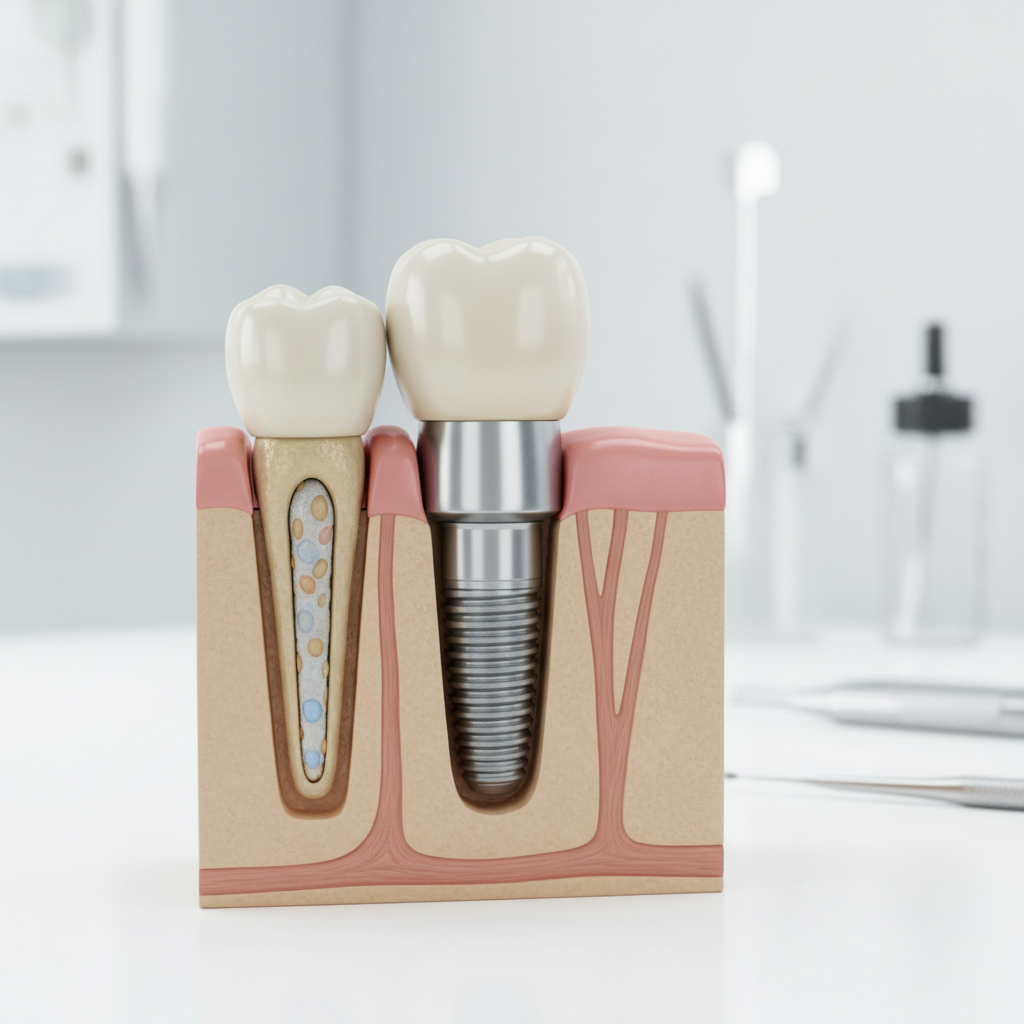
A dental implant is a surgically placed prosthetic root, typically fabricated from biocompatible Grade 4 or 5 titanium alloy. Through a biological process known as osseointegration, the implant fixture fuses directly with the surrounding alveolar bone, creating a stable and durable foundation for a replacement tooth (crown). This process prevents the bone resorption (atrophy) that inevitably follows tooth extraction, a critical advantage over traditional bridges and dentures.
Candidate Evaluation: Are You a Suitable Candidate for Dental Implants?
Successful implantology begins with a meticulous patient evaluation. Not every individual is an immediate candidate for implant placement. A thorough assessment of local (oral) and systemic health factors is non-negotiable.
Anatomical & Systemic Health Criteria
- Jawbone Density and Volume: Adequate bone quantity and quality are paramount for achieving primary implant stability—the initial mechanical grip of the implant in the bone. Following tooth loss, the jawbone begins to resorb. If significant time has passed, the bone may be too thin or short, necessitating ancillary procedures like bone grafting or a sinus lift.
- Periodontal Health: The patient must be free of active periodontal (gum) disease. The same bacteria that cause periodontitis can lead to peri-implantitis, a destructive inflammatory condition that can cause implant failure. Any existing gum disease must be treated and stabilized before implant surgery.
- Systemic Health Conditions: Uncontrolled systemic diseases can compromise healing and increase the risk of failure. Uncontrolled diabetes, for instance, impairs wound healing and immune response. Patients with a history of radiation therapy to the head and neck or those on certain bisphosphonate medications require special consideration.
- Smoking and Tobacco Use: Smoking is a significant risk factor. It constricts blood vessels, reducing blood flow to the surgical site, which can severely impair osseointegration and increase the risk of infection and long-term failure.
The Critical Role of Diagnostic Imaging: Cone-Beam Computed Tomography (CBCT)
Standard 2D dental X-rays (periapicals, panoramic) are insufficient for modern implant planning. The standard of care is Cone-Beam Computed Tomography (CBCT), a specialized medical imaging modality that provides a high-resolution, three-dimensional view of the patient's jaw anatomy.
A CBCT scan allows the surgeon to:
- Quantify Bone Volume: Measure the exact height and width of the alveolar ridge in sub-millimeter increments to select the appropriate implant diameter and length.
- Assess Bone Quality: Evaluate bone density (cortical vs. cancellous bone) to anticipate primary stability.
- Map Critical Anatomical Structures: Precisely locate and avoid vital structures such as the inferior alveolar nerve (which provides sensation to the lower lip and chin), the mental foramen, and the maxillary sinus. This is crucial for preventing permanent nerve damage or sinus perforation.
- Digitally Plan Surgery: The CBCT data (in DICOM format) is imported into specialized software for a virtual surgery, allowing the implant to be placed in the ideal position for optimal biomechanical loading and aesthetics before the patient ever enters the operating room.
The Surgical Protocol: From Digital Planning to Final Restoration
Reputable dental clinics, whether in the US or Turkey, follow a stringent, multi-phased surgical and restorative protocol rooted in principles of sterility and biological respect for tissues.
Phase 1: Pre-Surgical Digital Planning & Surgical Stent Fabrication
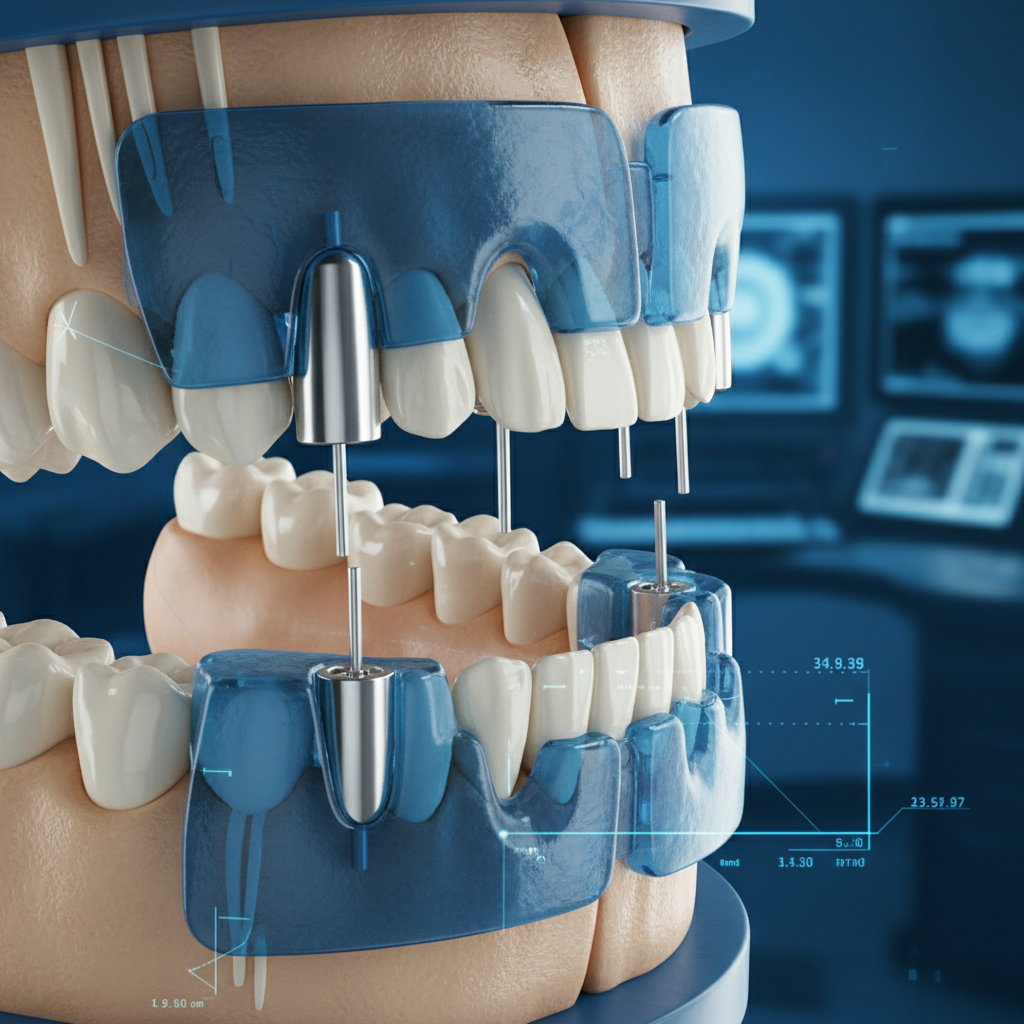
As highlighted, the process begins with the CBCT scan. This digital data is then used to design and fabricate a 3D-printed surgical guide (or stent). This custom-fit appliance fits over the patient's existing teeth or gums and contains precise sleeves that dictate the exact angle, position, and depth of the surgical drills. The use of a computer-guided surgical stent transforms the procedure from a freehand art to a precise, engineered science, dramatically increasing accuracy and safety.
Phase 2: The Surgical Procedure (Aseptic Technique)
The implant placement is a sterile surgical procedure. The clinical environment must adhere to strict aseptic protocols to prevent cross-contamination and post-operative infection.
- Anesthesia: The procedure is typically performed under local anesthesia, rendering the area completely numb. For anxious patients or complex full-mouth cases, options like intravenous (IV) sedation are often available.
- Surgical Site Preparation: The area is disinfected, and a sterile field is established using surgical drapes.
- Incision and Flap Elevation: A small incision is made in the gum tissue, and a flap is gently elevated to expose the underlying jawbone.
- Osteotomy Preparation: Using the surgical guide, the surgeon performs the osteotomy (the preparation of the site in the bone). A series of precision drills of increasing diameter are used at a slow speed with copious sterile saline irrigation. This irrigation is critical to prevent overheating and necrosis (death) of the bone cells, which would compromise osseointegration.
- Implant Placement: The sterile implant fixture is removed from its packaging and carefully threaded into the prepared osteotomy. The surgeon uses a calibrated torque wrench to measure the insertion torque, which provides a quantitative assessment of the implant's primary stability.
- Closure: A healing abutment or a cover screw is placed on top of the implant, and the gum tissue is repositioned and secured with fine sutures.
Phase 3: Osseointegration & Healing
This is the biological quiet phase. Over the next 3 to 6 months, osteoblasts (bone-forming cells) migrate to the implant's microscopically textured surface and deposit new bone directly onto the titanium oxide layer. This fusion of living bone to the inert implant surface is osseointegration. The duration depends on factors like bone quality and the patient's healing capacity. During this period, the patient may have a temporary prosthesis for aesthetic purposes.
Phase 4: Final Restoration
After osseointegration is confirmed (often via a resonance frequency analysis or a simple percussion test), the restorative phase begins.
- Abutment Placement: The healing abutment is removed, and the final abutment is secured to the implant. The abutment is the connector piece that will support the final crown.
- Digital Impression: A high-precision digital intraoral scanner (e.g., TRIOS, iTero) is used to capture a 3D model of the implant, abutment, and surrounding teeth. This is far more accurate and comfortable than traditional putty impressions.
- Crown Fabrication: The digital scan is sent to a dental laboratory, where a final crown is designed using CAD (Computer-Aided Design) software and milled from a solid block of monolithic zirconia or E-max ceramic using CAM (Computer-Aided Manufacturing) technology. This ensures a precise fit and excellent aesthetics.
- Final Delivery: The crown is either cemented or screw-retained onto the abutment. Screw-retained crowns are often preferred as they are retrievable for maintenance without damaging the restoration.
Understanding FDA-Approved Implant Brands & Materials
American patients are rightly concerned about the quality of materials used abroad. It is essential to ensure that the Turkish clinic you choose uses globally recognized, premium implant systems that also have FDA approval in the United States. This ensures a long-term track record of clinical research, high manufacturing standards, and availability of components for your home dentist in the future.
- Premium FDA-Approved Brands: Look for clinics that offer well-documented systems like Straumann (Switzerland), Nobel Biocare (Switzerland), and Dentsply Sirona (Astra Tech, USA/Germany). These brands have decades of research and high success rates.
- Material Science: The vast majority of implants are made from commercially pure Grade 4 Titanium (CP Ti) or Grade 5 Titanium Alloy (Ti-6Al-4V). These materials are exceptionally biocompatible and have the ideal properties for promoting osseointegration.
- Zirconia Implants: A ceramic, metal-free alternative is also available. Zirconia implants offer excellent aesthetics (no gray show-through in thin gums) but have a less extensive long-term clinical track record compared to titanium.
Cost Analysis: Dental Implants in Turkey vs. the United States ($ USD)
The primary driver for dental tourism is the significant cost differential. This is not due to inferior quality or materials in reputable centers but rather the lower cost of labor, operational overhead, and favorable currency exchange rates. The table below provides a conservative comparison based on benchmark US private practice fees and costs at high-quality, JCI-accredited or equivalent clinics in Turkey.
| Procedure | Average US Cost (Benchmark Clinics) | Average Turkey Cost (Reputable Clinics) | Potential Savings ($) | Potential Savings (%) |
|---|---|---|---|---|
| Single Dental Implant (incl. abutment & crown) | $3,500 - $5,500 | $700 - $1,400 | $2,800 - $4,100 | 60-75% |
| All-on-4® Full Arch Restoration (per jaw) | $20,000 - $30,000 | $7,000 - $12,000 | $13,000 - $18,000 | 55-65% |
| Sinus Lift (Lateral Window) | $2,500 - $4,000 | $500 - $1,000 | $2,000 - $3,000 | 75-80% |
| Bone Graft (per site, minor) | $600 - $1,200 | $200 - $400 | $400 - $800 | 60-70% |
Note: These costs are estimates. US costs can be higher in major metropolitan areas. Turkish costs typically include consultation, CBCT scans, and temporary prosthetics, which may be billed separately in the US.
Navigating US Dental Insurance (Delta Dental, Cigna) for Overseas Treatment
Contrary to popular belief, it is often possible to receive some reimbursement from your US dental insurance PPO plan for treatment performed in Turkey. However, it requires a clear understanding of the process and realistic expectations.
Most US PPO plans (like those from Delta Dental, Cigna, Aetna, MetLife) will cover international care on an out-of-network basis. This means you cannot 'bill' the insurance directly from Turkey.
Here is the step-by-step process:
- Pre-Authorization: Before you travel, obtain a detailed treatment plan from your Turkish clinic. This plan should be itemized and use American Dental Association (ADA) codes for each procedure (e.g., D6010 for implant placement, D6058 for an abutment-supported crown). Submit this to your insurer for a pre-determination of benefits.
- Pay Out-of-Pocket: You will pay the Turkish clinic directly for all services rendered.
- Gather Documentation: Obtain a complete set of records, including itemized receipts (in English, if possible), treatment notes, and pre/post-operative X-rays or CBCT scans.
- Submit a Claim Form: Upon returning to the US, fill out your insurance provider's claim form and submit it along with all the documentation you collected.
Important Caveat: The insurance company will not reimburse you based on what you paid. They will reimburse you a percentage (e.g., 50%) of their determined 'Usual, Customary, and Reasonable' (UCR) fee for that procedure code in your home zip code. This UCR fee is often significantly higher than what you paid in Turkey, but your reimbursement will still be capped by your plan's annual maximum (typically $1,500 - $2,500).
Risk Management, Complication Mitigation, and Post-Operative Care
Any surgical procedure carries inherent risks. A high-quality clinical team mitigates these through meticulous planning and execution.
- Immediate Risks:
- Infection: Minimized by strict sterile protocol and prophylactic antibiotics where indicated.
- Nerve Impingement: Largely preventable with CBCT planning and guided surgery to ensure a safe distance from nerve canals.
- Sinus Perforation: A known risk when placing upper posterior implants, managed by careful technique and, if necessary, a sinus lift procedure.
- Long-Term Risks:
- Peri-implantitis: The most significant long-term threat. It is an inflammatory process similar to gum disease that causes bone loss around the implant. It is almost always linked to poor oral hygiene. Meticulous daily care and regular professional cleanings are essential.
- Prosthetic Complications: These include screw loosening or fracture of the ceramic crown, which are generally manageable by a restorative dentist.
Your post-operative care is critical. You will be provided with detailed instructions, including pain management protocols, dietary restrictions (soft diet initially), and oral hygiene instructions (e.g., using a chlorhexidine rinse). Long-term maintenance is identical to that of natural teeth: brushing, flossing (with specialized implant floss), and regular dental check-ups.
Conclusion: Making an Informed, Evidence-Based Decision
Receiving dental implants in Turkey can be a safe, effective, and highly cost-efficient option for American patients, provided that rigorous due diligence is performed. The potential for savings is substantial, but it should not be the only deciding factor. The focus must be on the quality of care, the qualifications of the surgical team, the adoption of modern digital technology like CBCT and guided surgery, and the use of well-documented, FDA-approved implant systems.
By arming yourself with the clinical knowledge presented in this guide, you can move beyond marketing and ask targeted, intelligent questions. Request to see case portfolios, inquire about the specific implant brands and technology being used, and confirm the credentials of the oral surgeon or prosthodontist. A transparent, high-quality clinic will welcome this level of scrutiny and readily provide the information you need to make a confident and medically sound decision for your long-term oral health.
Related Dental Guides (Topic Cluster)
This clinical guide is strictly informational and reviewed by certified medical specialists at Özel Natural Clinic Tıp Merkezi under Turkish Ministry of Health standards. It does not replace personal clinical diagnosis or treatment planning by a licensed physician.
Uzm. Dt. Oğuzhan Sunar
Periodontology & Advanced Implant Surgery
Uzm. Dt. Oğuzhan Sunar is a renowned Periodontology and Advanced Oral Surgery Specialist who introduced the groundbreaking "Discision" corticotomy technique to international orthodontic and surgical literature. Graduating from Hacettepe University in 2013 and completing advanced specialty residency at Ordu University in 2019, Dr. Sunar has published extensively in peer-reviewed scientific journals and trained surgical cohorts across Europe. Since 2023, he has served as the Department Supervisor of Dental Surgery at Natural Clinic Private Medical Centre in Istanbul, specializing in complex full-mouth reconstructions (All-on-4 / All-on-6), zygomatic/pterygoid implants, and Khoury bone grafting.
Scientific References, Medical Journals & Clinical Guidelines
Every surgical, material, and recovery assertion in this guide cites primary peer-reviewed sources:
-
[1]
PubMed Indexed Clinical Oral Implants ResearchA systematic review of the survival and complication rates of implant-supported single crowns (SCs) after an observation period of at least 5 years. https://pubmed.ncbi.nlm.nih.gov/23062125/
-
[2]
PubMed Indexed The International Journal of Oral & Maxillofacial ImplantsComputer technology applications in surgical implant dentistry: a systematic review. https://pubmed.ncbi.nlm.nih.gov/25216140/
-
[3]
PubMed Indexed Acta Orthopaedica ScandinavicaOsseointegrated titanium implants. Requirements for ensuring a long-lasting, direct bone-to-implant anchorage in man. https://pubmed.ncbi.nlm.nih.gov/7246099/
Frequently Asked Clinical Questions
Patient inquiries answered by our dental surgical team
How much does a full mouth of dental implants cost in Turkey?
A full mouth restoration using the All-on-4 or All-on-6 protocol in Turkey typically costs between $7,000 and $12,000 per arch (jaw). This is in stark contrast to the United States, where the same procedure can cost $20,000 to $30,000 or more per arch. The price in Turkey usually includes the implants, surgical placement, temporary prosthesis, and the final zirconia or hybrid bridge.
Are dental implants from Turkey safe and high quality?
Yes, provided you choose a reputable, accredited clinic. Top-tier Turkish clinics adhere to international standards of sterilization and surgical protocol. They use the same FDA-approved, globally recognized implant brands (like Straumann, Nobel Biocare) and advanced technology (CBCT scans, 3D surgical guides) as leading clinics in the US and Europe. Patient safety and quality are paramount in these facilities.
Can I use my US dental insurance (e.g., Delta Dental) in Turkey?
You generally cannot use your insurance for direct payment in Turkey. However, most PPO plans allow you to pay for the treatment out-of-pocket and then submit a claim for out-of-network reimbursement upon your return to the US. You will need to get detailed receipts and treatment plans with US ADA codes from the Turkish clinic. Reimbursement is typically a percentage of your insurer's 'customary' rate for the procedure, up to your annual plan maximum.
How many trips to Turkey are required for dental implants?
The standard protocol for dental implants requires two separate trips. The first trip (typically 5-7 days) is for the initial consultation, CBCT scan, and surgical placement of the implant fixtures. You then return home for a healing period of 3-6 months for osseointegration. The second trip (typically 6-8 days) is for placing the abutments and fitting the final, permanent crowns or bridge.
What happens if I have a problem with my implant after returning to the US?
This is a critical consideration. Prosthetic-related issues, like a loose crown or abutment screw, can usually be handled by any local dentist in the US, especially if a major, globally-recognized implant system was used. For surgical complications, which are rare with proper planning, you would need to contact the Turkish clinic. Many top clinics offer guarantees on their work and may cover the cost of remedial treatment, though you would have to bear the travel costs.